





So you've fallen for those wild, leopard-spotted good looks, and now you're wondering what you're actually signing up for.
The Bengal cat personality is a lot, in the best and most exhausting senses of the word, and a Bengal's temperament is the single biggest thing that decides whether the two of you click or spend your days in a battle of wills.
We've spent years helping more than 600,000 cat parents keep their pets happy and hydrated, and Bengals are one of the breeds we get asked about most. It's usually some version of the same worry: is this energetic, intelligent cat going to take over my life?
So here's the honest answer about the Bengal’s personality, the lovely bits and the hard bits, so you can decide for yourself.
The Lovable Side of a Bengal's Personality
Let's start with why people fall head over heels for the Bengal, because there's plenty to love about the Bengal cat personality.
Affectionate and Closely Bonded to Their People
Few cats bond as hard as Bengals, and that bonding runs deep.
Affectionate and fiercely loyal, a Bengal decides you're their person and then you've got a shadow for life, one Bengal cat that follows you room to room, supervises your shower, and fully expects to be part of whatever you're doing.
If you've ever wondered how cats choose their favorite person, an affectionate Bengal makes it obvious. It's you, and this loyal cat would like you to know it often.
Highly Intelligent and Easy to Train
Seriously, these cats are clever. You can teach a Bengal to sit, high-five, walk on a leash, and come when called, sometimes faster than a dog, and leash training and clicker training both play to that intelligence.
Clicker training isn't a gimmick for such an intelligent cat, it's one of the best ways to tire out that busy brain.
The catch is that a Bengal cat's intelligence cuts both ways, so an intelligent Bengal who learns to open a cupboard will keep doing it for fun.
▶ Watch: How to Train a Bengal Cat
Playful and Almost Dog-Like
Fetch? Bengals are in. This playful, dog-like cat will chase a toy, trot it back, and drop it at your feet for round forty-seven.
Honestly, that dog-like, playful streak is a huge part of a Bengal's personality, and it's why this active cat suits homes that genuinely want to play with their pet rather than admire it from across the room.
Curious About Everything Around Them
Nothing happens in your home without a curious Bengal cat supervising it, paws on the counter and nose in the bag. Running taps, grocery bags, the open fridge, a new box, your laptop the second you lift the lid.
That curious, lively temperament is delightful right up until it isn't, and a Bengal’s curiosity is a core part of what makes them so engaging.
Social and Great With the Whole Family
People cats, through and through. A social Bengal tends to do well with respectful kids, greets visitors instead of bolting under the bed, and wants to be in the thick of family life.
Some even ride around on your shoulders like a furry parrot, and the reasons cats like to sit on your shoulders fit the social, people-first Bengal personality perfectly.
Energetic Well Into Adulthood
Most cats mellow after their first couple of years. Not this one. The energetic Bengal skips that memo entirely. A Bengal stays kitten-like, agile, and playful well into adulthood, holding onto the lively energy of a Bengal kitten for years.
That's wonderful if you want a lively, active companion and a bit much if you were hoping for a lap cat who sleeps eighteen hours a day.
The Demanding Side of a Bengal's Personality
Now for the part the cute breed profiles skim over. The Bengal cat’s personality comes with real demands, and pretending otherwise is how so many of them end up rehomed.
High Energy That Needs an Outlet
Be ready for this: an athletic, high-energy cat asks a lot every single day. Without a real outlet, all that energy doesn't vanish, it turns into 3am zoomies, knocked-over glasses, and a Bengal wound far too tight.
Some Bengals are sensitive to overstimulation too, and a condition like feline hyperesthesia can make an already energetic, intense cat even twitchier, so calm routines really do matter for such an active one.
Very Vocal and Persistent
These are vocal cats, and they are not shy about it. This talkative cat will chirp, trill, and then full-on yell when it wants something.
A chatty Bengal is not the type to accept a polite no, so if you work from home or treasure a quiet flat, the vocal Bengal personality signs you up for a running commentary.
Strong Hunting Instinct
That gorgeous wild look comes with a wild streak, traced straight back to the Asian leopard cat in its wild ancestry. Bengal cats have a strong prey drive, so fast-moving toys, fingers, and sometimes smaller pets switch on the hunter in them.
That prey drive is manageable with the right play, but it's real, and it shapes who Bengals can live well with.
Boredom Leads to Destructive Behaviour
A bored but energetic Bengal with nothing to do will find something to do, and you won't enjoy it. Boredom is where the destructive behaviour comes from, the shredded sofa, the emptied cupboards, the unrolled loo paper.
A bored Bengal isn't being naughty, this intelligent cat is just under-stimulated, and the destructive behaviour is on us to fix.
Prone to Loneliness When Left Alone
Long stretches of alone time? Bengal cats hate them. This is a social, affectionate cat that gets attached and is prone to loneliness, which can tip into anxiety and destructive behaviour when a Bengal is solo all day.
This isn't a cat you adopt and leave to its own devices from nine to five.
Why Bengals Are Obsessed With Water
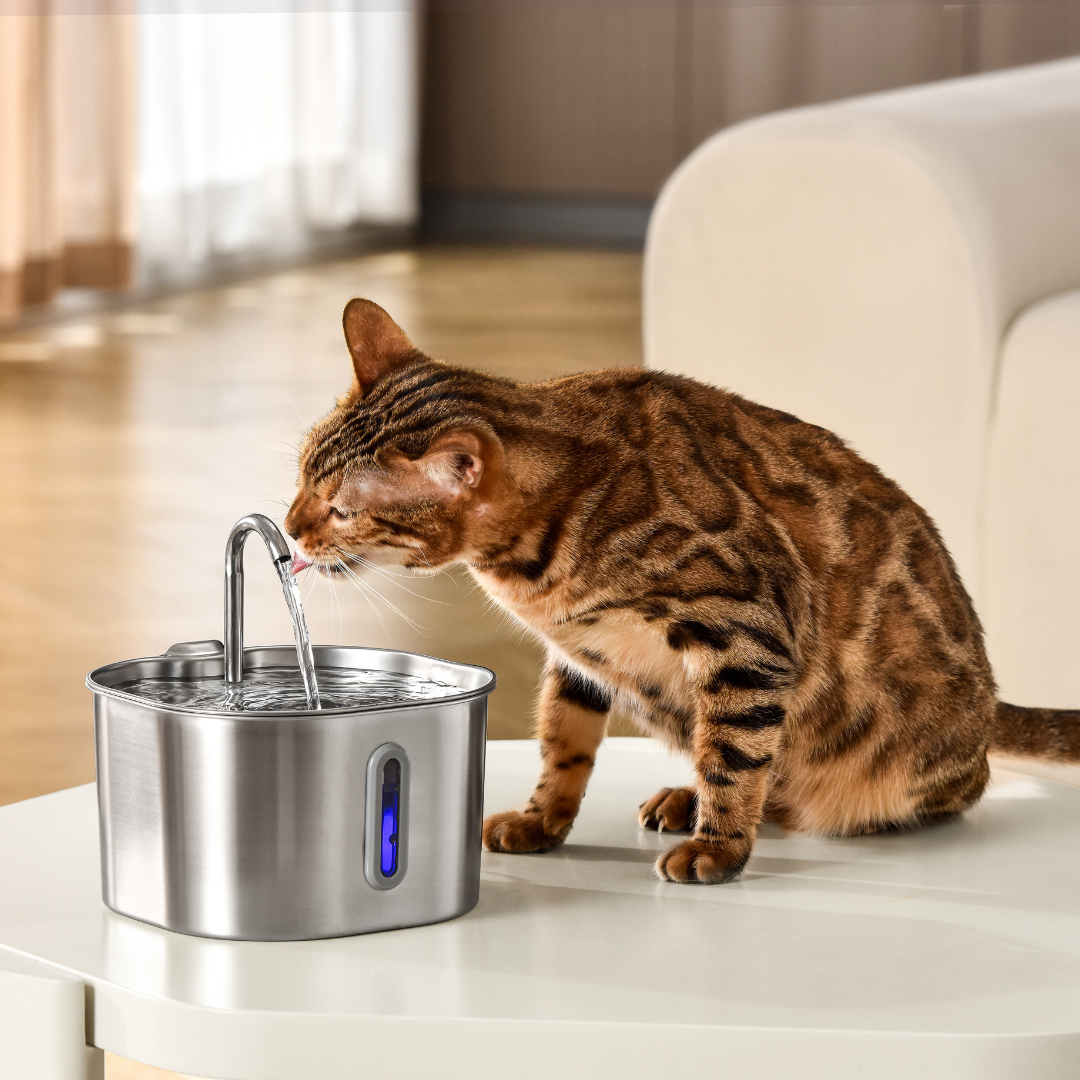
If you've spent any time around Bengals, you know the one trait that surprises everyone. Bengal are obsessed with water.
One will happily paw at the bowl, dunk their toys, hop in the shower with you, and treat a running tap like the best toy you never bought.
Bengals carry more recent wild ancestry than most breeds, tracing back to the Asian leopard cat. That heritage is part of why so many are drawn to running water and will pick a moving source over a full bowl. It is a hunting instinct dressed up as a party trick.
It's playful, but it's also a genuine hydration win, because they're famously bad at drinking enough on their own, which is how you end up with a dehydrated cat. A few small tweaks can get your cat to drink more, and a Bengal's love of moving water is the easiest trait to put to good use.
How a KittySpout Fountain Turns Tap Obsession Into Healthy Hydration

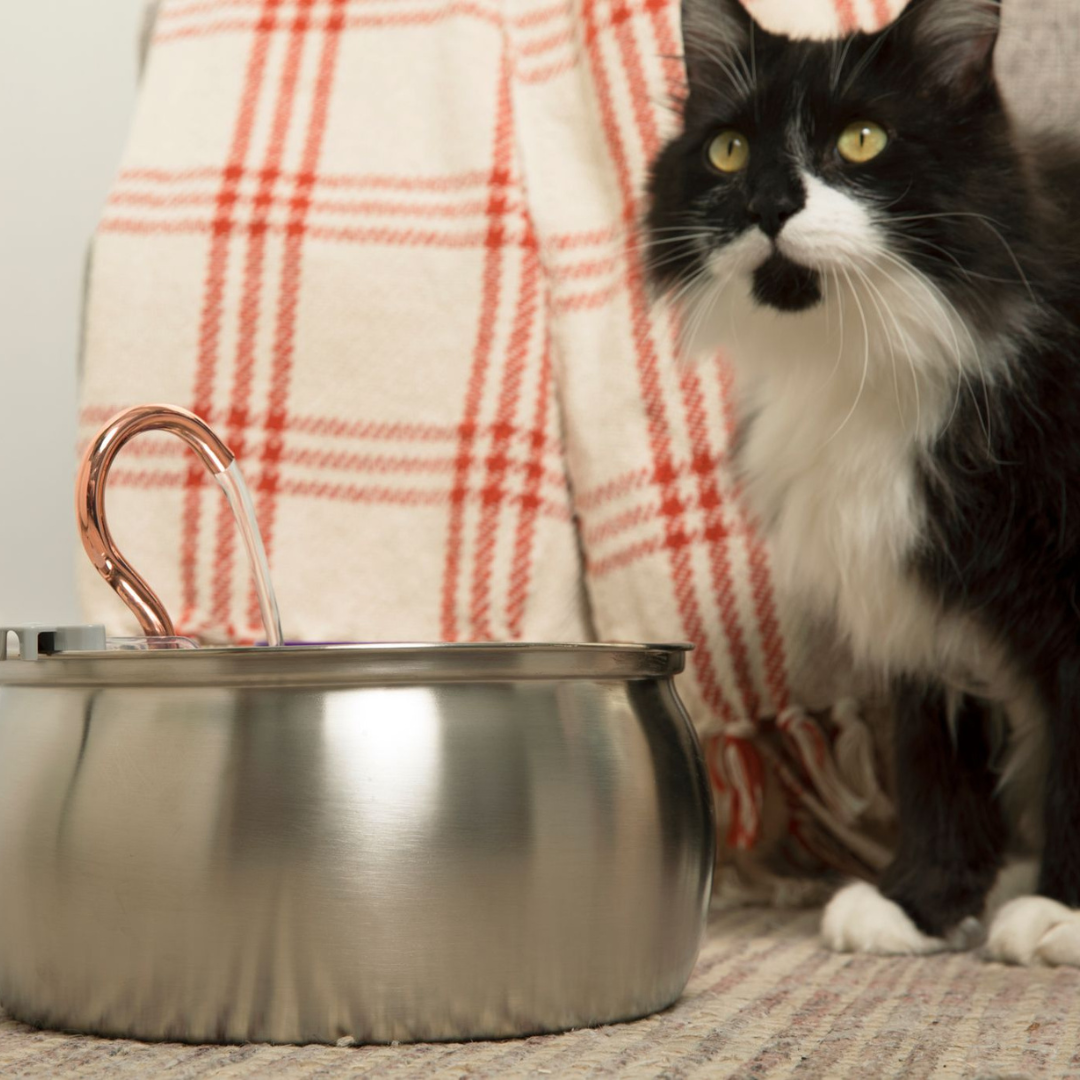
A Bengal who paws at the tap or splashes in the sink is not being naughty, they are showing you a breed trait. A KittySpout fountain gives that energy somewhere to go, with a faucet-style stream and three flow modes an inquisitive cat can actually play with. Set it where your Bengal already patrols and the drinking usually follows the curiosity.
Because it is stainless steel there is no plastic for slime to cling to, which matters for a cat this hands-on with their water. The wireless base means you can move it to whichever perch your Bengal has claimed this week. No cord trailing across the floor, nothing tempting to chew, one less thing to police.
The payoff is simple and real: a Bengal who drinks more is a better-hydrated, healthier cat, and you're no longer leaving the tap trickling every morning. It's the same fountain that's already won over more than 600,000 cat parents.
If that tap obsession sounds familiar, pick up the KittySpout Wireless Fountain 2.0 and let them drink the way they're wired to.

Who Bengals Are (and Aren't) Right For
So who actually thrives with a Bengal cat? Be honest with yourself here, because it matters more than any personality quiz, and the Bengal cat personality is not a fit for every home.
How Much Time You Can Give
Every single day, your Bengal cat needs real interaction. If your hours are long and nobody's home, this energetic cat will struggle, and honestly, so will you.
Bengal cats suit people who are around, want a hands-on pet, and have time for interactive play daily, not just on weekends.
Space and Vertical Room
Forget floor space for a moment, because height is what really matters here. Bengals are climbers, and that climbing instinct means they want vertical space to go up: tall cat trees, wall shelves, a window perch to survey their kingdom.
For an active indoor Bengal, a flat with good vertical space beats a big house with no cat trees and nowhere to climb.
Living With Young Kids
Bengals can be brilliant family cats, especially with kids old enough to play gently and respect their boundaries.
With very young children, the Bengal cat's high energy and prey drive mean supervision is non-negotiable, for everyone's sake, and early socialisation helps a lot.
Sharing a Home With Other Pets
Sharing the house? Plenty of Bengals live happily in a multi-cat household, and even alongside dogs, particularly when they're raised together from the start with good socialisation.
That strong prey drive does make small pets like hamsters, birds, and fish a genuine risk, though, and a timid resident cat may find an energetic Bengal exhausting.
Whether It's Your First Cat
Honestly? A Bengal is a tricky first cat. You can absolutely make it work if you've never had one, but go in with your eyes open, a plan for all that energy, and a willingness to learn fast. A laid-back, low-maintenance lap cat the Bengal is not.
Setting Your Bengal Up for a Happy Life
Almost every demanding trait in a Bengal's character becomes manageable once you channel it. Here's how to set your Bengal cat up for a happy, settled life.
Give Them Plenty of Daily Exercise
Real interactive play has to happen every day for an energetic Bengal cat, not just a toy abandoned on the floor. Wand toys, fetch, a laser chase that ends with something this active cat can actually catch.
Twenty minutes twice a day burns off the energy that would otherwise turn into mischief.
Give Them Vertical Space to Climb
Give your Bengal cat somewhere to go up. Cat trees, wall shelves, and perches let an athletic Bengal climb, watch, and feel secure, and that vertical space takes the pressure off your curtains and kitchen worktops.
Use Puzzle Feeders and Brain Games
Put that intelligent brain to work for its dinner. Puzzle feeders, treat balls, and quick hide-and-seek games turn mealtimes into enrichment and mental stimulation, and they slow down a clever Bengal cat who'd otherwise be bored by lunchtime.
Keep a Predictable Daily Routine
Routine matters more than you'd think. Feeding, play, and wind-down at roughly the same times help an intense, energetic Bengal cat feel secure, and that usually means fewer 3am wake-up calls and a calmer home all round.
Don't Leave Them Alone Too Long
If you're out all day, plan for it. A second pet, a midday drop-in, food puzzles for enrichment, and a fountain to investigate all help your social Bengal cat.
The honest truth, though, is that this affectionate cat wants company and does best when it gets it.
So, Is a Bengal Your Kind of Cat?
So, the short version. The Bengal cat personality is affectionate, hilarious, and genuinely hard work. Give this high-energy cat enough daily play and company, and you'll have the most engaging companion you've ever lived with.
Leave the same cat bored and alone, and you'll both be miserable. If that's a trade you're happy to make, you might just be a Bengal cat person. 😺
Bengal Cat Personality FAQs
Are Bengal cats good pets?
Yes, for the right home. Bengals are affectionate, intelligent, and endlessly entertaining, but they're also energetic and demanding, so they suit active people who can give them time, play, and company.
If you want a quiet, low-maintenance lap cat, they're probably not your match.
Are Bengal cats affectionate?
Very. Bengals are deeply affectionate, bond closely with their people, and love being involved in everything you do. Their affection is active and on their terms, more follow-you-around-and-help-with-chores than curl-up-quietly-for-hours.
Are Bengal cats aggressive?
Not by nature. Bengals are bold, energetic, and intense rather than aggressive, though boredom, overstimulation, and rough handling can lead to nippy or reactive moments.
Plenty of exercise, gentle handling, and respecting their limits keep things friendly. If aggression appears suddenly, it's worth checking in with your vet.
Are Bengal cats high maintenance?
For time and attention, yes. A Bengal's coat is low-fuss and easy to groom, but this breed's need for exercise, mental stimulation, and company makes them one of the more demanding cats to keep genuinely happy.
Do Bengal cats get along with other cats?
Often, yes, especially when raised together with good socialisation. A confident, playful, energetic companion is ideal.
A shy or elderly resident cat may find a Bengal's energy overwhelming, so match temperaments and take introductions at the quieter one's pace.
How long do Bengal cats live?
You'll often see 12 to 16 years quoted, and many Bengals do reach that with good care. The honest picture is more sobering, though. A large UK veterinary study put the breed's median life expectancy at around 8.5 years, shorter than the average cat.
That's partly because Bengals are prone to inherited conditions like hypertrophic cardiomyopathy (HCM), progressive retinal atrophy, and pyruvate kinase deficiency, an inherited anaemia.
Health-tested breeding, a healthy weight, and regular vet checks give your Bengal the best shot at the upper end.